What Is Electrical Cable Management and How It Supports Better Cable Organization
Modern electrical systems rely on extensive networks of wires and cables to power homes, offices, and industrial facilities. As electrical requirements increase, unmanaged wiring can quickly become cluttered, unsafe, and difficult to maintain. This is where electrical cable management becomes essential. A structured approach to routing and supporting wires and cables helps maintain order, improves safety, and simplifies future modifications. Proper cable organisation is not only about appearance but also about ensuring long-term reliability of electrical installations.
What is electrical cable management
Electrical cable management refers to the systematic planning, routing, and securing of wires and cables within an electrical system. It ensures that cables follow defined paths, remain protected from damage, and stay accessible for inspection or upgrades. Effective electrical cable management focuses on grouping wires and cables logically while preventing tangling, excessive bending, or unnecessary stress.
By applying cable management principles, installers can achieve consistent cable organisation across different environments, whether in residential wiring, commercial buildings, or industrial installations.
Common issues caused by poorly organised electrical cables
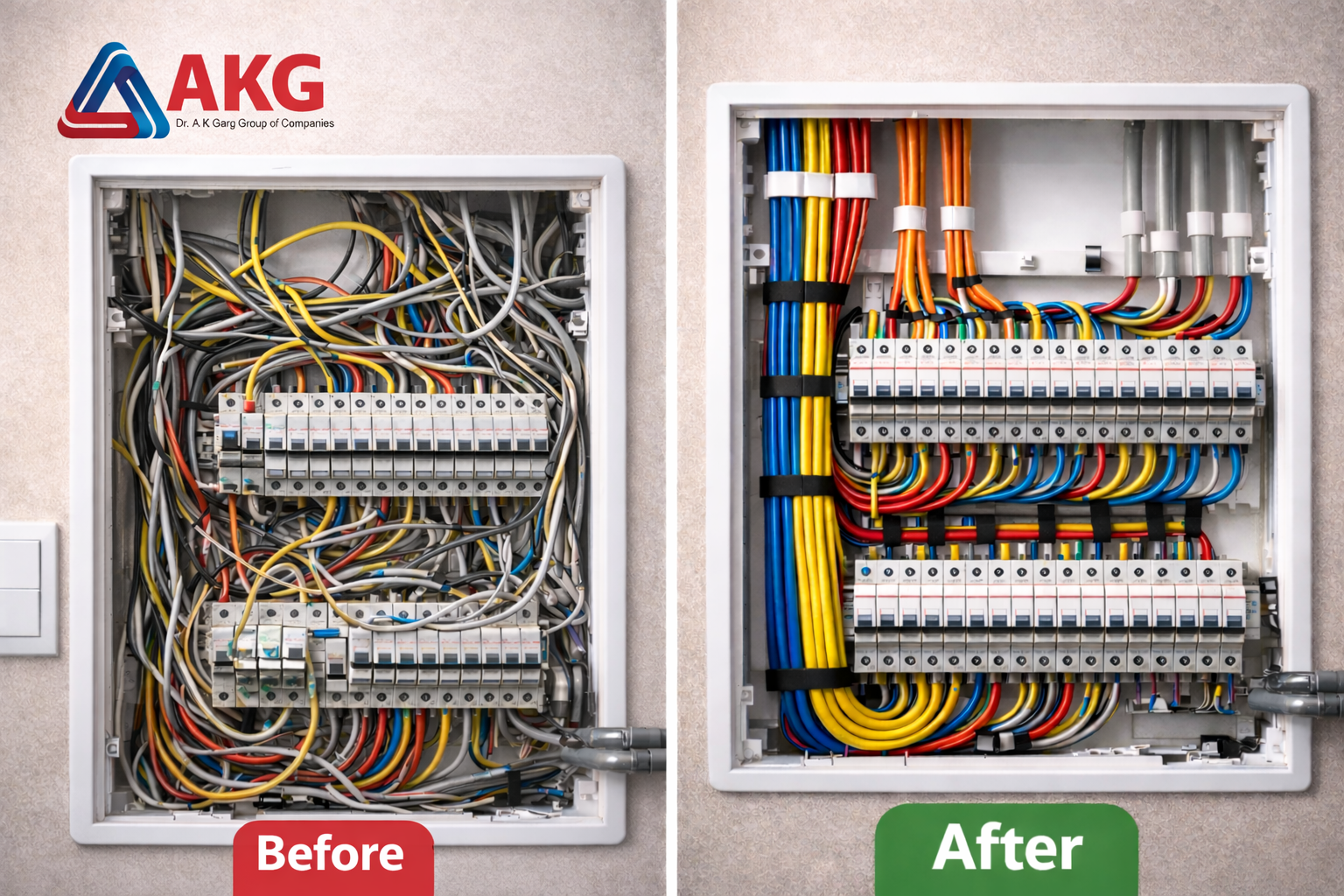
When wires and cables are not managed properly, several issues can arise. Poor cable organisation often leads to tangled wiring, uneven routing, and difficulty identifying individual circuits. Over time, this can increase wear on cable insulation and make maintenance more complex.
In many cases, improper routing and fixing result in avoidable installation errors. Reviewing common electrical wiring mistakes highlights how unstructured wiring practices contribute to safety risks, inefficient layouts, and frequent troubleshooting. These challenges reinforce why electrical cable management is a necessary foundation for organised wiring systems.
How electrical cable management helps organise cables effectively
Electrical cable management plays a key role in improving cable organisation by creating defined pathways for wires and cables. Structured routing reduces clutter and allows cables to be grouped according to function or circuit type. This makes installations easier to understand and maintain.
By using appropriate management practices, wires and cables remain properly supported, reducing strain at connection points. This approach also improves airflow around cables and prevents accidental damage during routine maintenance. Effective electrical cable management ensures that wires and cables remain organised throughout the lifecycle of an installation.
In structured systems, managing wires and cables properly also supports consistent installation standards across projects.
Common approaches used for electrical cable management
There are several approaches commonly used to implement electrical cable management depending on the application. These include routing wires and cables through defined channels, securing them along walls or ceilings, and grouping them to prevent overlap. Each approach aims to support long-term cable organisation while maintaining accessibility.
Selecting the right method depends on factors such as installation type, cable quantity, and future expansion needs. Regardless of the approach, the goal remains the same: keeping wires and cables protected, organised, and easy to manage through structured electrical cable management practices.
Key considerations when planning electrical cable management
Before planning electrical cable management, it is important to understand the installation environment and overall cable requirements. Factors such as cable type, routing length, available space, and accessibility should be assessed carefully. Thoughtful planning helps ensure that wires and cables follow clear, efficient paths without unnecessary bends, overlaps, or congestion.
It is also important to consider future maintenance and system expansion at this stage. Well-planned cable organisation makes it easier to add or adjust wires and cables later without disturbing the existing setup. Taking these aspects into account supports effective electrical cable management and helps reduce long-term wiring challenges.
Understanding how wires and cables are routed and grouped within the system allows installers to make informed planning decisions before finalising the cable layout.
Conclusion: Understanding cable management as a foundation for organised wiring
Electrical cable management forms the backbone of safe, efficient, and organised wiring systems. By structuring how wires and cables are routed and secured, installations become easier to maintain and more reliable over time. Strong cable organisation reduces clutter, minimises installation errors, and supports long-term system performance.
Applying effective electrical cable management practices ensures that wires and cables remain protected and accessible throughout their service life. For any structured electrical installation, understanding and implementing proper cable management principles is essential to achieving clean and dependable wiring outcomes using quality wires and cables.
Frequently Asked Questions About Electrical Cable Management
1. Is electrical cable management only important for large installations?
No, electrical cable management is important for installations of all sizes. Even small wiring setups benefit from organised cable routing, which improves safety, clarity, and long-term maintenance.
2. How does electrical cable management improve system reliability?
By keeping wires and cables properly routed and supported, electrical cable management reduces strain, prevents accidental damage, and helps maintain consistent performance over time.
3. Does proper cable organisation make fault identification easier?
Yes, organised cable layouts make it easier to trace circuits, identify issues, and perform repairs without disturbing the rest of the wiring system.
4. Does electrical cable management help standardise wiring layouts across projects?
Yes, electrical cable management supports consistent routing and grouping of wires and cables, which helps maintain uniform wiring layouts across different installations or project phases.