What Are the Different Types of Electrical Wires and Cables Used in Wiring Systems
Choosing the right types of wires and cables is one of the most critical decisions in any electrical project. Whether you are wiring a home, a hospital, a factory, or an agricultural setup, the cable type you select directly affects safety, performance, and long-term reliability.
But cables alone do not make a wiring system. The conduits, casing, and cable management products that house and protect those cables are equally important to how the system performs over time.
With so many different types of wires and cables available in the market today, it can be difficult to know which one suits your specific application. This guide breaks down the key types of electrical wires and cables used in modern wiring systems, explains the infrastructure that houses them, and helps you make the right selection for your project.
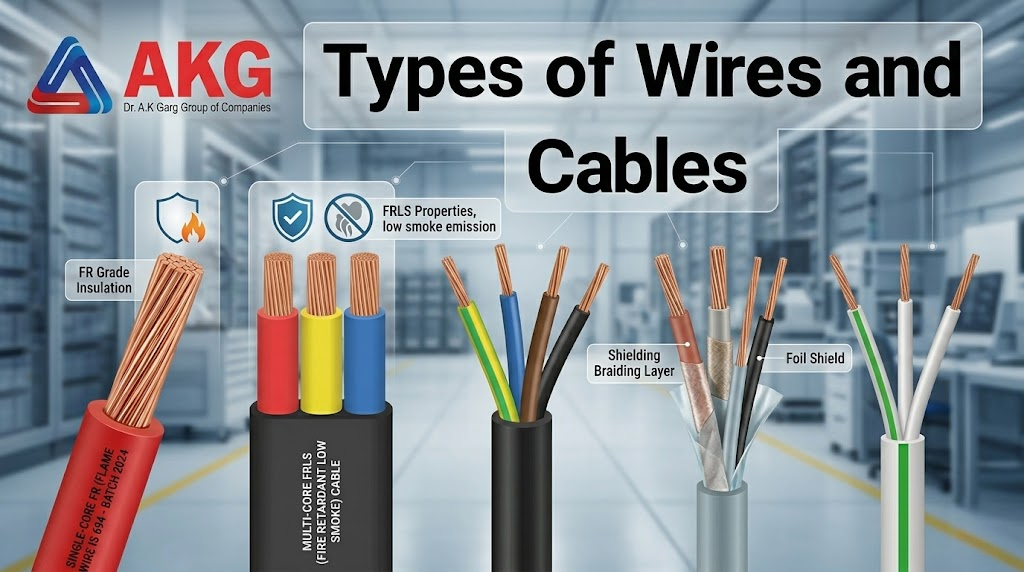
Different Types of Wires and Cables
Flame Retardant (FR) Cable
FR cables are insulated with a specially formulated Flame Retardant PVC compound that resists the spread of fire along the cable.
The insulation is designed with a high oxygen index and high temperature index, which allows the wire to withstand overloads and prevent electrical mishaps. FR cables carry IS 694 approval and are rated up to 1100V.
Key features:
- Resists flame propagation along the cable length
- High temperature resistance insulation with flame retardant properties
- Suitable for all types of residential and commercial wiring
- Bright electrolytic grade copper conductor, annealed and bunched together
- Available in red, yellow, blue, black, green, and grey
FR cables are ideal for homes, offices, and commercial buildings where fire safety is a priority but the environment does not carry extreme fire risk.
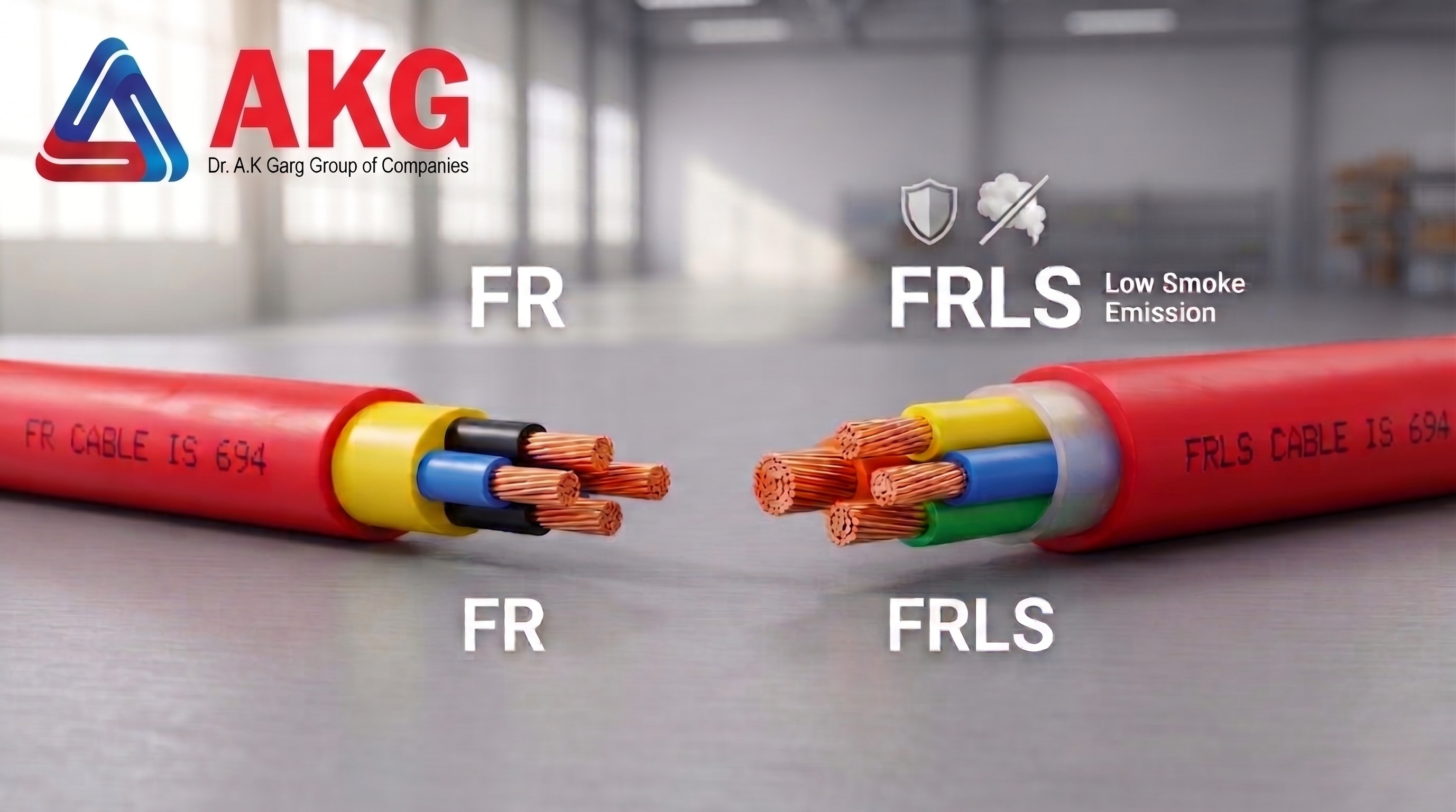
Flame Retardant Low Smoke (FRLS) Cable
FR cables go a step beyond FR by addressing both flame spread and smoke emission during a fire event.
Ordinary PVC insulation releases dense black smoke and acidic toxic fumes during fire exposure. This impairs visibility, hampers rescue operations, and puts occupants at serious risk. AKG FRLS cables are insulated with a specially formulated Flame Retardant Low Smoke compound that restricts the spread of flame while keeping smoke emission minimal.
Key features:
- Flame retardant low smoke insulation with heat resistance properties
- Retards fire spread along the cable
- Emits minimum smoke and reduced toxic or acidic fumes
- Carries IS 694 approval mark
- Voltage grade up to and including 1100V
- Conductor: thin strands of electrolytic copper, multi-drawn for uniformity of resistance, dimension, and flexibility
FRLS cables are the recommended choice for multi-storied buildings, hotels, hospitals, schools, commercial complexes, chemical factories, and densely wired public buildings.
Zero Halogen Flame Retardant (ZHFR) Cable
ZHFR cables represent the highest level of fire safety among the types of electrical cables available for building wiring.
AKG ZHFR cables are processed using a Zero Halogen Flame Retardant compound that is 100% PVC-free and eco-friendly. In a fire situation, AKG ZHFR cables do not emit toxic or poisonous fumes. The insulation does not melt or drip, smoke emission is minimal and non-toxic, and occupants trapped in a fire are not at risk of suffocation, making evacuation far safer.
Key features:
- 100% PVC-free and halogen-free insulation
- Does not emit toxic or poisonous fumes during fire
- Insulation does not melt or drip in case of fire
- Minimal, non-toxic smoke emission
- Insulation meets international fire safety and zero halogen emission standards
- Voltage grade up to and including 1100V
- Conductor: thin strands of electrolytic copper, multi-drawn for uniformity of resistance, dimension, and flexibility, uni-laid with high precision and compacted
ZHFR cables are best suited for wiring in hospitals, hotels, schools, high-rise buildings, apartments, laboratories, commercial complexes, and all installations where fire safety is of the highest importance.
Multicore Round Flexible Cables
Multicore round flexible cables consist of two or more insulated cores laid in a helical construction within a single outer sheathing. They are designed to carry power to appliances and equipment that require multiple conductors in one cable assembly.
Key features:
- Two or more insulated cores in helical construction
- Special grade PVC for better flexibility
- Available in grey and black outer sheathing
- Lower power consumption
- Every meter length is marked for accurate installation
- Electrical grade high conducting annealed bare copper conductor meeting recognized quality standards
- Available in standard PVC, heat resistant PVC, and FRLS insulation and sheathing variants
These cables are widely used in domestic appliances, equipment wiring, power cords, and general-purpose electrical connections where flexibility and multi-conductor design are needed.
Submersible Flat Cables (Three Core)
Submersible flat cables are specifically engineered for heavy-duty applications where the cable is exposed to water, pressure, and mechanical stress. Three-core flat cables are the standard configuration for submersible pump wiring.
Key features:
- Designed for submersible pumps and heavy-duty industrial applications
- Sheathing made of special grade PVC to withstand abrasion and prevent water ingress
- Conductor: high purity bright, electrolytic grade, plain annealed copper with superb flexibility conforming to harmonized grades HO5V-K, HO7V-K, and BS 6360 Class 5
- Lower power consumption
- Meets international standards
- Every meter length is marked
These cables are ideal for borewell submersible pumps, agricultural water extraction systems, and any industrial environment where cables are submerged or exposed to wet conditions.
How Cables Fit into a Complete Wiring System
Selecting the right cable type is only one part of building a safe and functional wiring system. The infrastructure that houses, routes, and protects those cables is equally critical to long-term performance and safety.
In any properly installed electrical wiring system, cables do not run exposed. They are routed through protective systems that shield them from physical damage, moisture, rodents, chemicals, and other environmental hazards. Two primary products serve this purpose: conduit pipes and PVC casing capping.
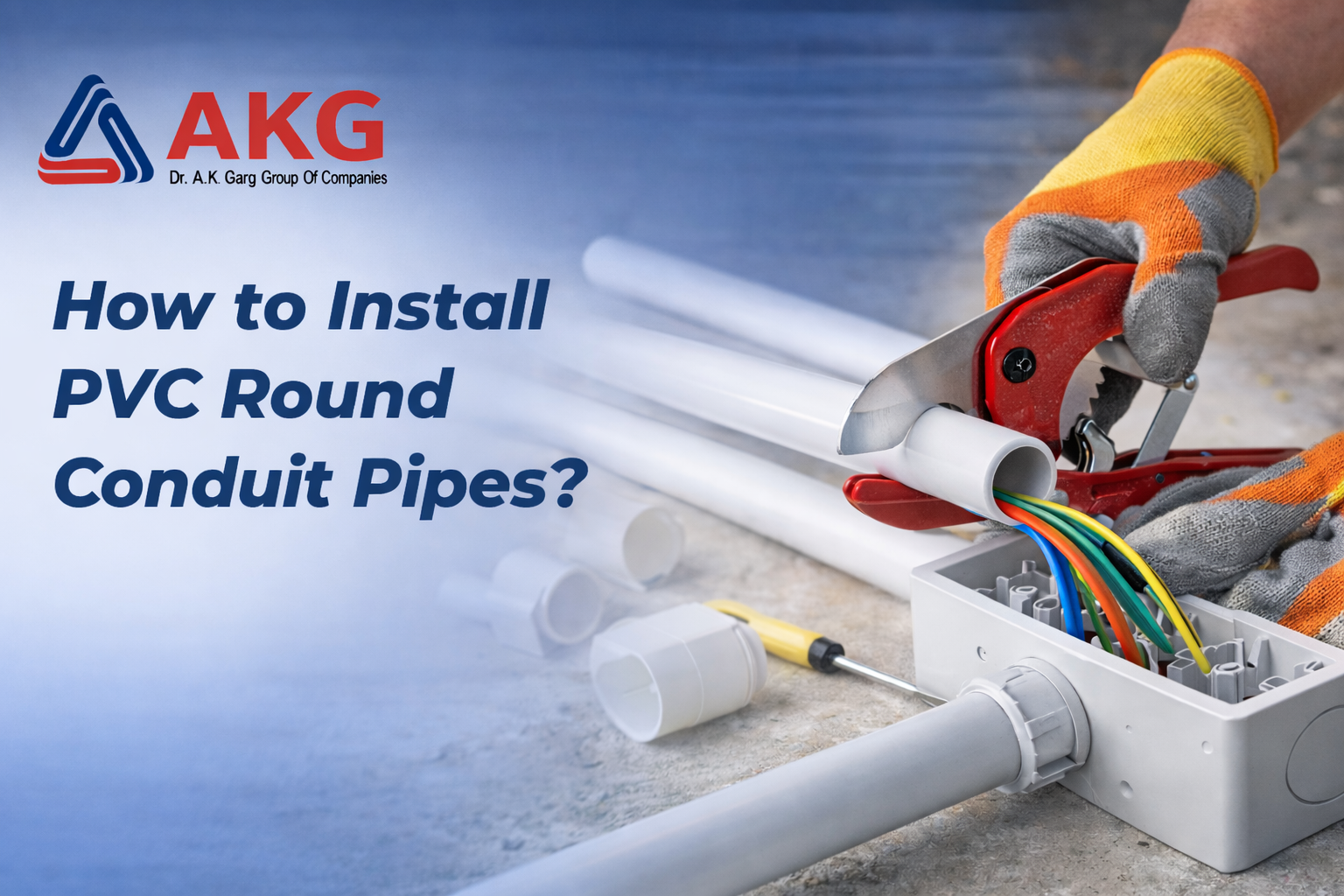
PVC Round Conduit Pipes and Fittings are used in concealed wiring applications, embedded within walls, ceilings, or concrete structures. AKG's electrical round conduit PVC pipes and fittings are manufactured from specially formulated unplasticised polyvinyl chloride (uPVC) using Extra Super High Impact materials. They are manufactured in accordance with IS 9537 Part 3 for uPVC conduits and IS 3419 for uPVC fittings, and are adaptable to standard concealed wiring systems. Available in light, medium, and heavy mechanical strength variants in nominal sizes of 20mm, 25mm, 32mm, 40mm, and 50mm, they provide the right level of protection for every wiring environment. A full range of compatible fittings including bends, junction boxes, couplers, elbows, and end caps ensures secure and professionally finished installations.
AKG also offers conduit pipes with FRLS properties, which limit flame spread and emit minimal smoke during fire incidents. For the highest fire safety rating, conduit pipes with a self-extinguishing grade do not drip flaming particles and meet internationally recognized flame retardant safety standards.
PVC Casing Capping and Trunking is used for surface wiring applications in homes, offices, and showrooms where concealed wiring is not possible or practical. AKG's PVC casing capping and trunking is made from unplasticised high impact strength polyvinyl chloride, offering high impact strength and a robust configuration. The unplasticised formulation ensures no change in dimension or shape even after prolonged use or storage. Available in ivory and grey colours, and in a wide range of sizes from 16x16mm to 50x16mm, these products present a clean, professional wiring finish while keeping cables organized and protected.
Together, the right cable type and the right wiring enclosure system form a complete, safe, and standards-compliant electrical installation.
How AKG Group India's Cable Types Fit into Wiring Systems
AKG Group India manufactures all five cable types along with a complete range of conduit pipes, fittings, PVC casing capping, and trunking products under one roof. Each product is designed for a specific set of wiring conditions and safety requirements.
From FR cables for standard residential wiring to ZHFR cables for the most fire-sensitive public buildings, AKG's range covers the full spectrum of electrical safety needs. Multicore round flexible cables address appliance and equipment wiring, while submersible flat cables are purpose-built for pump and borewell applications. The conduit and casing capping range ensures every cable type has a matching protective housing system for safe and organised installation.
All AKG wires, cables, and wiring system products are manufactured with electrolytic grade copper conductors and uPVC materials, produced at ISO 9001:2015 certified facilities in Delhi NCR, and comply with relevant Indian and international standards. This ensures consistent performance and reliable quality across every product in the range.
Selecting the Right Cable for Your Project
Understanding the different types of wires and cables is only useful when you can match the right type to your specific project requirements. Here are the key factors to consider:
- Environment and fire risk: Standard residential spaces can use FR cables. High-occupancy or fire-sensitive buildings require FRLS or ZHFR cables.
- Smoke and toxicity concerns: In hospitals, schools, and high-rise buildings, ZHFR cables are the safest choice due to zero toxic fume emission.
- Application type: Submersible pump installations require three-core flat submersible cables. Multi-appliance or equipment wiring benefits from multicore round flexible cables.
- Wiring method: Concealed wiring installations need uPVC conduit pipes and fittings. Surface wiring installations use PVC casing capping and trunking.
- Standards compliance: Confirm that the cable and conduit system meets the relevant IS or IEC standard for your application and voltage grade.
- Depth and load: For borewell and industrial applications, select cables rated for the specific operating conditions of that environment.
When in doubt, consult a qualified electrical engineer or contact the manufacturer directly for guidance on the most suitable cable and wiring system for your project.
Conclusion
The types of wires and cables used in any electrical installation are not interchangeable. Each type is engineered for a specific performance profile, whether that is basic flame retardancy, low smoke emission, zero halogen safety, flexible multi-conductor use, or submersible heavy-duty applications.
But a wiring system is more than just the cable. The conduit pipes, casing capping, and trunking that protect and route those cables are equally important to the safety, longevity, and quality of the installation.
Understanding the full picture, from types of electrical cables to the protective infrastructure around them, helps engineers, contractors, and building owners make informed decisions that protect lives, meet safety standards, and ensure long-term system reliability.
AKG Group India's comprehensive range of wires and cables, from FR and FRLS to ZHFR, multicore, and submersible flat cables, combined with their complete conduit pipes and fittings and PVC casing capping and trunking systems, gives you access to a complete wiring solution for every project need, backed by decades of manufacturing expertise and strict quality standards.
FAQ
What factors should be evaluated when choosing electrical wires and cables?
The key factors to evaluate include the type of installation, fire risk level of the environment, smoke and toxicity safety requirements, voltage grade, conductor size, and applicable Indian or international standards. For residential use, FR cables are suitable. For public buildings and hospitals, FRLS or ZHFR cables are recommended. Always verify compliance with relevant standards before selection.
How does insulation material affect cable performance?
Insulation material determines a cable's resistance to heat, fire, and chemical exposure. FR PVC insulation resists flame spread. FRLS Flame Retardant Low Smoke compound additionally controls smoke emission. ZHFR insulation is 100% halogen-free, does not emit toxic fumes, and does not melt or drip during fire. The insulation material directly influences safety performance, cable lifespan, and suitability for specific environments.
Why is it important to select cables based on project standards and codes?
Selecting cables that conform to relevant standards such as IS 694, IS 5831, or IEC 60332 ensures the cable has been tested and verified for specific safety and performance criteria. Using non-compliant cables increases the risk of electrical failures, fire hazards, and legal liability. Standards compliance also ensures consistent performance across the installed wiring system.
Can the same type of wire be used in all electrical installations?
No. Different installations require different types of electrical wires based on environmental conditions, fire safety requirements, and application type. A standard FR wire suitable for home wiring is not appropriate for a hospital or a borewell pump. Matching the cable type to the specific demands of each installation is essential for safety, reliability, and regulatory compliance.