Water Hammer in Pipes: What It Is, Effects, and How to Prevent Pipe Damage
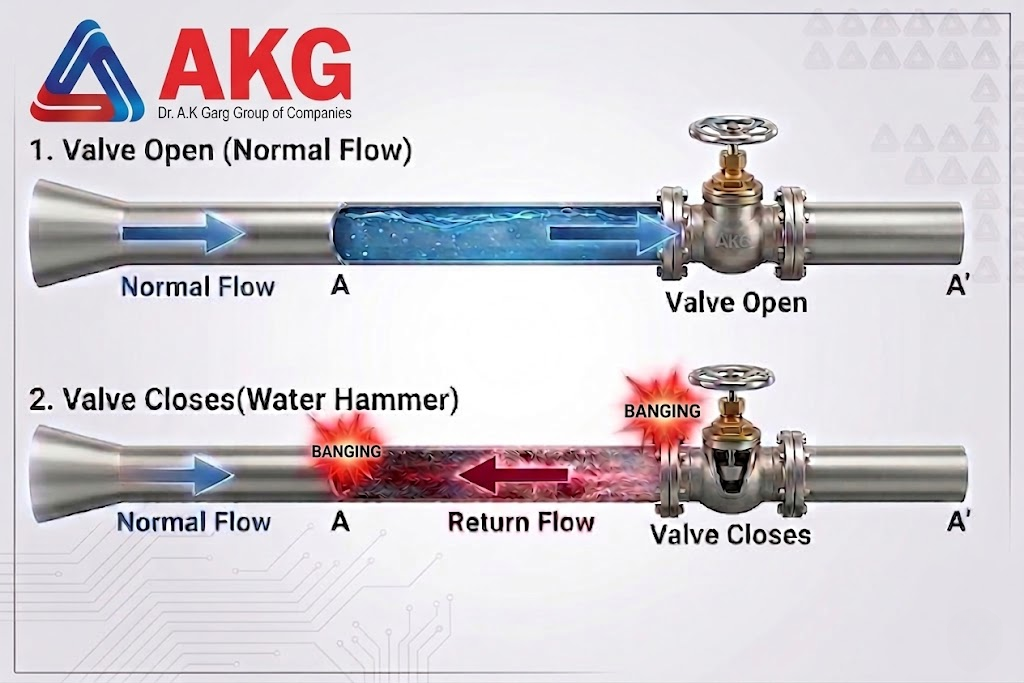
If you have ever heard a loud banging or thudding sound coming from your walls right after shutting off a tap or an appliance valve, you have already experienced water hammer in pipes.
It may sound like a minor nuisance. But over time, repeated water hammer can weaken joints, damage fittings, and cause serious plumbing failures that cost far more to fix than to prevent.
This guide explains what water hammering is, what it does to your plumbing system, and exactly how to stop it from happening.
What Is Water Hammering in Pipes?
What is water hammering?
It is a pressure surge or shockwave that travels through a plumbing system when flowing water is suddenly forced to stop or change direction. The technical term for this phenomenon is hydraulic shock.
When water is moving through a pipe at speed and a valve closes abruptly, the momentum of that water has nowhere to go. The result is a sudden pressure spike that slams against the pipe walls, fittings, and valves with considerable force.
The Science in Simple Terms
Water, unlike air, is virtually incompressible. When it is moving at speed and is stopped suddenly, the kinetic energy converts instantly into a pressure wave. This wave travels back and forth through the pipe until it dissipates.
The faster the valve closes and the higher the water pressure, the more intense the shockwave. In extreme cases, the pressure during a water hammer event can momentarily reach several times the normal operating pressure of the system.
What Triggers It in Everyday Homes
Water hammer is more common than most homeowners realize. The typical triggers include:
- Washing machines and dishwashers with solenoid valves that snap shut instantly at the end of a cycle
- Taps or stopcocks closed too quickly by hand
- High water supply pressure from the municipal line
- Pipes that are not properly secured to walls or supports
- Long pipe runs with high flow velocity
Any situation where water is moving fast and stops suddenly is a potential trigger for water hammer.
Effects of Water Hammer on Your Plumbing System
Understanding the effect of water hammer on a plumbing system is important because the damage builds gradually. Early warning signs are easy to ignore until the problem becomes costly.
Immediate Effects You Can Hear and Feel
The most obvious sign of water hammer is sound. You will typically hear:
- A loud bang or thud immediately after closing a tap or valve
- Repeated knocking or rattling sounds from inside walls
- Vibration in pipes, especially at bends and joints
These sounds indicate that a pressure shockwave has just passed through your plumbing. While a single event may cause no lasting damage, the repeated hammering effect accumulates over time.
Long-Term Damage That Costs You More
This is where water hammer in pipes becomes a genuine financial concern. Over months and years, repeated hydraulic shock causes:
- Loosening of pipe joints: Repeated stress can cause solvent-welded or threaded joints to weaken and eventually leak
- Damage to fittings and valves: Pressure spikes put extreme mechanical stress on elbows, tees, reducers, and valve bodies, leading to cracks or failures
- Pipe movement and wear: Unsecured pipes that bang against walls or brackets wear through their outer surface over time
- Appliance damage: Washing machines, water heaters, and dishwashers connected to a system with chronic water hammer experience premature wear on their internal solenoid valves and seals
- Joint leaks in concealed plumbing: Once a joint hidden within a wall starts leaking due to water hammer stress, the damage to the surrounding structure can be severe and expensive to repair
The long-term effect of water hammer should never be underestimated, especially in multi-story buildings and high-pressure municipal supply areas.
How to Prevent Water Hammer and Protect Your Pipes
The good news is that water hammer in pipes is entirely preventable. A combination of the right equipment, correct pipe selection, and good installation practice eliminates it in most cases.
Install a Pressure Reducing Valve (PRV)
High water supply pressure is one of the leading contributors to water hammer. A Pressure Reducing Valve, installed at the point where the main supply enters your building, reduces the incoming pressure to a safe and stable operating level.
When operating pressure is controlled, the intensity of any hydraulic shock is significantly reduced. A PRV is one of the most effective single interventions for chronic water hammer problems in homes with high municipal supply pressure.
Use Slow-Close Valves and Air Chambers
Slow-close or quarter-turn valves are designed to shut off water flow gradually rather than instantly. This eliminates the sudden stop that creates the shockwave in the first place.
Air chambers are another traditional solution. These are vertical pipe sections filled with air, installed near taps and valves. When a valve closes, the trapped air acts as a cushion, absorbing the pressure surge before it can travel through the system as a shockwave. Water hammer arrestors, which are modern sealed versions of the same principle, are also widely used and require less maintenance than open air chambers.
Choose the Right Pipe Material
Pipe material plays a meaningful role in how a plumbing system handles pressure surges. Rigid metal pipes, especially older galvanized iron systems, transmit shockwaves very efficiently because of their inflexibility. They also corrode internally over time, creating rough surfaces that increase turbulence and worsen pressure dynamics.
Modern UPVC and CPVC piping systems offer practical advantages in this context. AKG Group India's UPVC plumbing system is manufactured as per ASTM D 1785 standard and is available in Schedule 40, 80, and 120 pressure classes, making them suitable for a range of operating pressures in residential and commercial plumbing applications. AKG UPVC pipes are lead-free, non-corrosive, and do not rust or form scale over time. Their smooth internal surfaces support consistent water flow without the turbulence that worsens pressure dynamics in corroded metal pipes.
AKG CPVC pipes, manufactured using Japanese material and Austrian technology, are suitable for both hot and cold water systems and are available in SDR 11 and SDR 13.5 pressure classes. Both systems resist corrosion and chemical degradation, contributing to stable, long-term plumbing performance.
Choosing quality pressure-rated pipes that match your system's requirements is a fundamental step in building a plumbing system that resists the effects of water hammer over the long term.
Secure Your Pipes Properly
Even when the pressure surge itself is minor, pipes that are not properly clamped and supported will bang against walls, joists, or brackets. This amplifies the noise and causes physical wear on the pipe surface and at connection points.
Pipes should be secured at regular intervals with appropriate brackets or clamps. Bends and direction changes are particularly important to anchor correctly, as these are the points where the shockwave changes direction and exerts the most lateral force.
Ensure that pipes have adequate clearance from surfaces so that movement is absorbed by the clamp rather than translated into an impact against a hard structure.
FAQ
What causes water hammer in pipes?
Water hammer in pipes is caused by a sudden stop or change in water flow direction, creating a hydraulic shockwave. Common causes include fast-closing solenoid valves in washing machines, taps shut too quickly, high supply pressure, and long pipe runs with high flow velocity. The shockwave travels back through the pipe system until it dissipates.
Is water hammer dangerous for plumbing?
Yes, over time. A single water hammer event rarely causes immediate failure. However, the repeated effect of water hammer weakens pipe joints, stresses fittings and valves, loosens connections, and can cause leaks in concealed plumbing. In systems with very high supply pressure, chronic water hammer can lead to premature failure of pipes, appliances, and seals.
Can UPVC pipes reduce water hammer?
UPVC pipes have smooth internal surfaces and do not corrode or form scale over time, unlike metal pipes. This supports consistent, turbulence-free water flow and reduces the pressure variation that contributes to hydraulic shock. While pipe material alone does not eliminate water hammer, using quality pressure-rated UPVC pipes as part of a well-designed and properly installed system supports better overall pressure management.
How do I stop water hammer at home?
The most effective approaches are: install a Pressure Reducing Valve to control incoming supply pressure; replace fast-closing valves with slow-close or quarter-turn valves; install water hammer arrestors near appliance connections; secure all pipes properly with brackets at regular intervals; and ensure your pipe system uses quality pressure-rated materials suited to your operating conditions. For persistent problems, consult a qualified plumber.